

Flatbed vs Lowbed Trailers. Which Transport Option is right for you
When it comes to transporting industrial cargo, machinery, and oversized loads, choosing the right trailer can make a massive difference in safety, efficiency, and cost. One of the most common comparisons logistics managers face is flatbed trailers vs lowbed trailers. Both options are widely used in heavy equipment transport, but they serve different purposes depending on the cargo type, height, weight, and road safety considerations.
In this detailed guide, we break down everything you need to know including flatbed trailer uses, lowbed trailer advantages, trailer types for cargo, road guidelines, hauling tips, and more. By the end, you’ll know exactly which trailer best fits your needs.
2. What Is a Flatbed Trailer and How Does It Work?
A flatbed trailer is one of the most versatile trailer types used in logistics. These trailers have an open deck, no sides, and no roof, making them ideal for loading cargo from any angle. If you’re wondering what a flatbed trailer is, think of it as a strong, flat platform designed for easy loading and unloading.
Flatbed Trailer Uses
Flatbeds are typically used for:
- Construction materials
- Palletized goods
- Pipes and tubing
- Industrial equipment
- Crated shipments
- Machinery that doesn’t exceed road height limits
Flatbed Trailer Dimensions Explained
While dimensions vary by country, the standard North American flatbed trailer is:
- Length: 48–53 feet
- Width: 8.5 feet
- Deck height: approx. 5 feet
- Load capacity: about 20–25 tons (varies by model)
Flatbed trailers are ideal when cargo height is not an issue and loading flexibility is a top priority.
3. What Makes a Lowbed Trailer the Best Choice for Heavy Machinery?
Lowbed trailers are the preferred choice for moving heavy and oversized machinery thanks to their 18-24 inch deck height, which allows taller equipment to be transported legally and safely. This design makes lowbeds ideal for carrying excavators, cranes, bulldozers, generators, drilling rigs, and similar machines. Regulations such as those from the Federal Highway Administration explain why lowbeds are necessary for oversized cargo height compliance.
Their low center of gravity provides stability, making them essential for industries like construction, mining, and oil & gas. To understand the dimensions of commonly transported equipment, resources such as the Caterpillar equipment catalog are helpful. Sectors like energy and oil & gas also follow logistics standards set by organizations like the American Petroleum Institute.
Height Clearance & Safety: Why Lowbeds Are the Safer Option
Lowbeds feature a detachable gooseneck, dropped mid-deck, and raised rear axles, making heavy machinery loading more manageable. Safety practices for handling and securing such equipment are highlighted in OSHA’s machinery handling guidelines.
Because the deck sits low, lowbeds can transport machinery that would exceed legal height limits on flatbeds. Oversize transport rules, such as FHWA’s oversize and overweight load regulationss, how why equipment like a 12-foot bulldozer fits safely on a lowbed but violates flatbed restrictions.
4. How Do Flatbed Trailer Advantages Compare to Lowbed Trailer Advantages?
Choosing between flatbed vs lowbed trailers depends largely on what you’re transporting. Each trailer type comes with its own set of advantages.
Flatbed Trailer Advantages
- Easy loading from sides, top, or rear
- Suitable for many cargo types
- Widely available and cost-effective
- No height restrictions for loading
- Secure tie-downs for various shapes
Lowbed Trailer Advantages
- Safest option for tall and oversized machinery
- Extremely high weight capacity
- Low center of gravity for stability
- Capable of carrying industrial equipment that exceeds road height limits
- Ideal for off-road construction equipment
If you need to transport machinery with high clearance requirements, lowbeds clearly take the lead.
5. How Does a Flatbed Compare to a Lowboy Trailer?
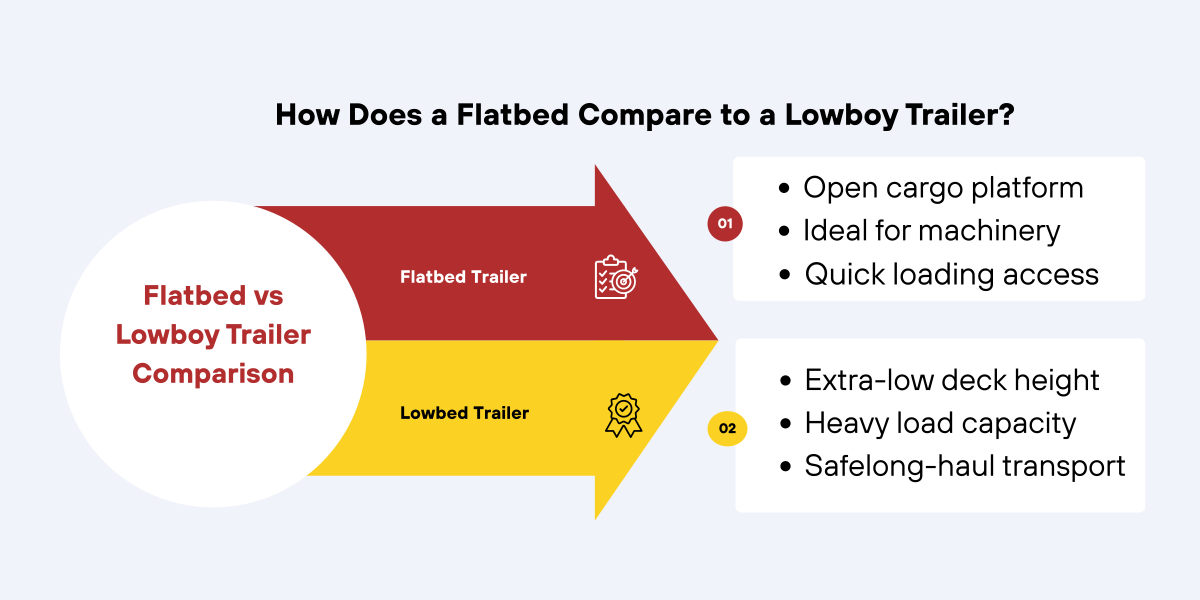
Many people confuse flatbed vs lowboy trailers because both are used for heavy equipment. The difference comes down to deck height and cargo restrictions.
Flatbed vs Lowboy Trailer Comparison
Feature | Flatbed Trailer | Lowboy / Lowbed Trailer |
Deck Height | High | Very Low |
Cargo Height Limit | Standard | Extremely High |
Weight Capacity | Moderate | Very High |
Loading Flexibility | Excellent | Moderate |
Best For | General freight | Tall and heavy machinery |
If your cargo might exceed legal height limits, a lowboy trailer becomes the better choice.
6. Which Trailer Is Best for Heavy Equipment Transport Methods?
In industrial logistics, the method you use to transport heavy machinery determines safety, cost, and compliance. Flatbeds are excellent for general equipment transport, especially when the cargo does not require height allowances. But for advanced heavy equipment transport methods, lowbeds are the more reliable option because they are specifically engineered to handle machinery with unusual shapes, extreme weight, and elevated centers of gravity. Guidelines for heavy machinery movement can be better understood through resources like the FHWA transport regulations.
Transporting heavy equipment requires precise planning, proper route assessment, and compliance with road safety laws. Lowbeds allow operators to transport heavy loads while maintaining safe weight distribution, which is essential for preventing road damage, avoiding fines, and ensuring overall stability. For safe loading and movement practices, industry teams often refer to OSHA’s load handling guidance to ensure safety compliance during transport operations.
7. What Are the Different Trailer Types for Cargo?
Understanding trailer types for cargo can help you determine the best hauling option for each load.
Common Cargo Trailer Types
- Flatbed trailers
- Lowbed / lowboy trailers
- Step deck trailers
- Double-drop trailers
- Extendable trailers
- Multi-axle heavy haul trailers
Each type is built for specific cargo shapes, weights, and dimensions.
8. How Do You Select the Right Trailer for Your Cargo?
Choosing the right trailer is not only about size it involves safety, cargo shape, road guidelines, and loading options.
Selecting the Right Trailer Considerations
- Cargo height
- Cargo weight
- Equipment shape
- Loading and unloading requirements
- Route restrictions
- Ground clearance needs for heavy cargo
- Required safety practices
When unsure, always consult with an equipment transport specialist.
9. What Are the Best Equipment Hauling Options Available Today?
Your equipment hauling options will depend on your cargo type and transport distance.
Common Options Include:
- Flatbed trailers for standard industrial loads
- Step deck trailers for moderately tall machinery
- Lowbed trailers for extremely tall or heavy machines
- Extendable trailers for long loads
- Heavy-haul modular trailers for oversized industrial cargo
For tall, heavy, or awkward loads, lowbeds remain the most reliable choice.
10. How Does a Flatbed Compare to a Step Deck Trailer?
The flatbed vs step deck trailer comparison is another frequent transport question.
Flatbed vs Step Deck
- Step deck trailers have two deck levels
- They offer 20–24 inches more height allowance
- They reduce the need for permits in some cases
- They are more versatile than flatbeds but less capable than lowbeds
- Step decks are a middle ground between flatbeds and lowbeds.
11. What Are the Key Cargo Loading Considerations?
Loading industrial cargo requires planning to ensure weight distribution and stability.
Cargo Loading Considerations Include:
- Centering the load on the deck
- Using proper tie-down equipment
- Checking ground clearance needs
- Balancing weight across axles
- Avoiding height limit violations
- Applying road safety guidelines
Proper loading minimizes transport risks and compliance issues.
12. What Road Safety Guidelines Should Trailer Operators Follow?
Whether you’re transporting with a flatbed or lowbed, following road safety guidelines for trailers is essential.
Key Safety Guidelines
- Perform pre-trip inspections
- Secure cargo with approved tie-downs
- Verify height, weight, and width compliance
- Follow routing restrictions for heavy haul cargo
- Use pilot vehicles when required
- Monitor trailer weight distribution
Compliance protects both the cargo and everyone on the road.
13. How Important Are Trailer Weight Distribution Tips?
Incorrect weight distribution can cause accidents, increase fuel usage, and damage the trailer.
Effective Trailer Weight Distribution Tips
- Place heavy items at the center
- Keep the center of gravity low
- Ensure even left-right balance
- Avoid placing too much weight on the rear axles
- Confirm load balance through scale checks
Lowbeds naturally offer better weight distribution due to their lower deck.
14. What Should You Know About Hauling Oversized Loads?
Oversized loads require careful planning and often special permits.
Hauling Oversized Loads Guide
Understand legal height, width, and length limits
- Choose a trailer suited for oversized equipment
- Plan the route in advance
- Use escort vehicles when needed
- Follow state or country guidelines
Lowbeds are frequently used for oversized loads since they minimize height issues.
15. How Do Differences Between Trailer Types Affect Transport?
In industrial logistics, the method you use to transport heavy machinery determines safety, cost, and compliance. Flatbeds are excellent for general cargo, but for heavy and oversized loads, lowbed trailers are more reliable, especially under rules set by the Transport General Authority (TGA) in Saudi Arabia, which regulates truck size, weight limits, and load compliance for domestic transport.
Transporting heavy equipment also requires careful planning, route assessment, and compliance with Saudi road‑transport laws. Lowbeds ensure safer weight distribution, reducing risks of road damage or legal fines. Cases of heavy‑load regulatory enforcement, including impoundments and fines, show that non-compliance (for example, using unauthorized vehicles) is strictly monitored by TGA.
16. Which Trailer Should You Choose for Industrial Cargo Transport?
When choosing trailers for industrial cargo, consider your cargo’s size, shape, and weight.
Best Trailer for Machinery Transport
- Flatbeds for compact machinery
- Step deck trailers for medium-height cargo
- Lowbeds for tall, heavy, or oversized machinery
If your load is extremely heavy or tall, the lowbed is almost always the best option.
Pros and Cons of Lowbed Trailers
Pros
- Handles very heavy loads
- Ideal for tall machinery
- Stable and safe
- Lower center of gravity
Cons
- Not ideal for standard pallets or boxed cargo
- Requires experienced operators
- Can be more expensive
FAQs
1. Is a lowbed trailer better than a flatbed for heavy equipment?
Yes lowbeds are designed for extremely heavy and tall machinery.
2. What is the main advantage of a flatbed trailer?
Flatbeds offer easy loading and greater versatility for standard cargo.
3. Are step decks a good alternative to flatbeds?
Yes, step decks allow more height clearance without needing a lowbed.
4. Do lowbed trailers require special permits?
Often yes, especially for oversized or overweight cargo.
5. Which trailer is safest for tall equipment?
Lowbeds are considered the safest due to their low center of gravity.
6. Can flatbed trailers carry machinery?
Yes, but only if the machinery fits legal height and weight limits.