

The logistics sector in Saudi Arabia is undergoing a massive transformation as the country moves toward achieving the ambitious goals outlined in Vision 2030. The state of the Saudi logistics industry has become one of the key pillars of national diversification and global competitiveness. As trade corridors expand, digital technologies take center stage, and sustainability becomes a strategic focus, Saudi Arabia’s logistics ecosystem is positioning itself as a global powerhouse connecting Asia, Europe, and Africa.
1. How Is Saudi Arabia’s Logistics Sector Growing in 2026?
The logistics sector of Saudi Arabia is one of the fastest-growing sectors in the Middle East. Driving this growth is significant public investment and progressive domestic policies, which position logistics as an essential part of the national economy.According to recent market research:
- One study estimates the freight and logistics market size in 2026 at USD 27.14 billion, with forecasts to reach USD 35.9 billion by 2030 (CAGR 5.8 %).
- Another source values the total logistics market in 2024 at USD 52.7 billion, with a forecast to reach USD 81.2 billion by 2033 (CAGR 4.9 %).
- According to the National Industrial Development and Logistics Program (NIDLP), the combined industrial + logistics sectors contributed SR 986 billion (USD 263 billion) to the non-oil GDP in 2024, accounting for 39 % of non-oil GDP.
- In the second quarter of 2026, the delivery sector processed 101 million orders, with Riyadh accounting for 45 % of volume
Logistical market reports suggest the sector could contribute about 6.5% to the GDP of the Kingdom, with expectations to reach 10% by 2030. This is an indication of total commitment by the public and private sector in enhancing logistics performance and operational efficiency. The Kingdom is currently in the midst of significant investments into Saudi transport infrastructure investment and supply chain modernization, including the proposed Saudi Landbridge rail line that connects the Red Sea coast with the Gulf. Which brings it closer to attaining its goals identified in Vision 2030.
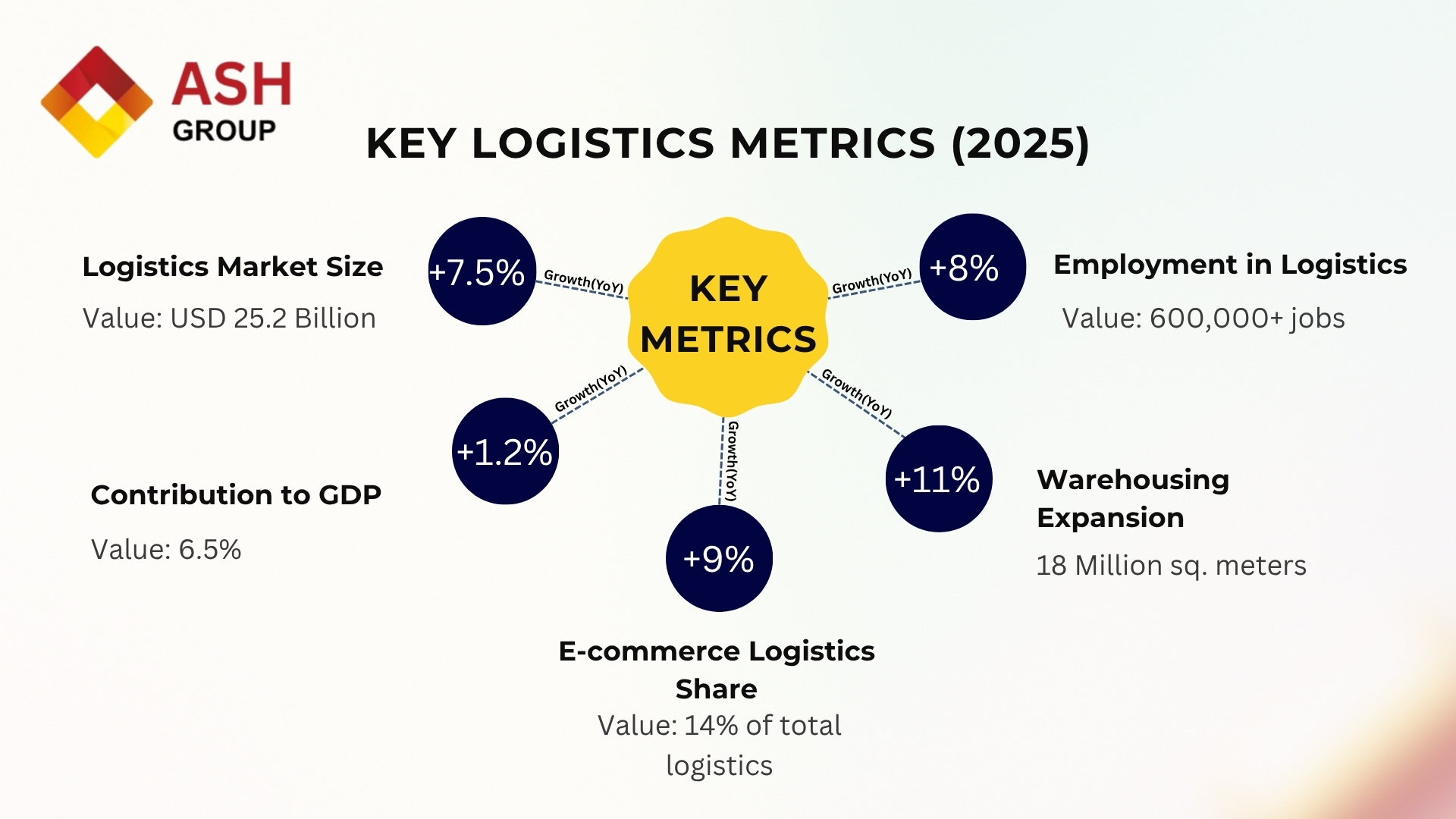
Key Logistics Metrics (2026)
| Category | Value | Growth (YoY) |
|---|---|---|
| Logistics Market Size | USD 25.2 Billion | +7.5% |
| Contribution to GDP | 6.5% | +1.2% |
| E-commerce Logistics Share | 14% of total logistics | +9% |
| Warehousing Expansion | 18 Million sq. meters | +11% |
| Employment in Logistics | 600,000+ jobs | +8% |
These figures demonstrate how rapidly the logistics ecosystem is expanding. Government initiatives, foreign investments, and advanced technologies are reshaping the business landscape, with Saudi Arabia emerging as one of the most dynamic logistics markets globally.
2. How Is Vision 2030 Transforming the Kingdom’s Logistics Landscape?
The Vision 2030 logistics transformation lies at the heart of the Kingdom’s wider-ranging economic diversification plan. The NTLS intends to position the KSA as a global logistics hub, bridging three continents through its key infrastructure projects like new seaports, road networks, and rail links that will connect multiple modes of transport—expanding multimodal transport in KSA. Moreover, Saudi Arabia’s smart logistics and automation initiatives are focusing on driving efficiency through the adoption of robotics, artificial intelligence, and IoT throughout supply chains. This reduces lead times, cuts costs, and enhances the overall service reliability.
Under Vision 2030, Saudi Arabia’s National Transport and Logistics Strategy (NTLS) aims to boost the sector’s GDP contribution from around 6% to 10% by 2030. The Kingdom is investing heavily in ports, airports, rail, and road networks, with port utilization.
Plans include 59 logistics zones nationwide, 21 of which are already operational, and a strong focus on smart logistics through robotics and AI, and IoT integration. The first Special Integrated Logistics Zone at King Khalid International Airport (Riyadh) marks a key milestone in advancing automation and multimodal connectivity.
This will involve major infrastructural projects like the development of new seaports, road networks, and rail links to interconnect various modes of transportation, a form of multimodal transport expansion in KSA.
Key focus areas under Vision 2030 include:
- Infrastructure Expansion: Development of modern seaports, airports, and rail networks to improve connectivity.
- Smart Logistics: Integration of robotics, AI, and IoT to optimize warehousing, transport, and inventory management.
- Multimodal Transport: Seamless integration of sea, air, and land routes to streamline goods movement.
- Sustainability Commitment: Investment in eco-friendly logistics solutions, electric fleets, and renewable energy operations.
3. Why Are E-Commerce and Sustainability Driving Logistics Growth in Saudi Arabia?
E-commerce logistics has arisen as a key generator of growth in the logistics sector in Saudi Arabia. The speed of adopting digital commerce platforms has led to a high demand for last-mile delivery solutions Saudi Arabia and flexible warehousing arrangements. The warehousing and freight expansion in Saudi Arabia has been driven by both local and global players entering the market. Companies have also emerged such as Alhmdaan Logistics that have attempted to implement sustainable logistics solutions utilizing renewable energy sources, electric delivery vehicles, and data-driven optimization tools. Sustainability is now more than just a corporate obligation, it has become a point of differentiation in the Saudi logistics and warehousing market.
- One industry note: The KSA e-commerce logistics market is projected to grow from USD 2.02 billion in 2024 to USD 3.32 billion by 2026.
- Growth in warehousing / logistics facilities: According to data, the number of logistics facilities has increased 267 % since 2021 (with the Eastern Province leading).
- Cold chain / secure logistics: The “secure logistics” market is estimated at USD 605.66 million in 2026, expected to reach USD 883.92 million by 2030.
4. How Is Digital Transformation Modernizing Saudi Supply Chains?
Saudi Arabia’s digital transformation strategy is connected to the modernization of the country’s supply chain. The use of new technologies provides supply chains Saudi Arabia the enhancement of the efficiency and transparency of logistics operations. The digital transformation of supply chains in Saudi Arabia includes the use of blockchain for traceability, cloud technology for coordination, and predictive analytics for forecasting future demand. These innovations bolstered the resilience of the Saudi Arabian supply chains. Global supply chain disruptions have minimal impact on operations. Saudi Arabia has also streamlined and automated customs processes and regulations, which increases the interest of foreign investors.
5. Challenges Facing the Logistics Industry
The logistics industry clients and providers still deal with multiple, unresolved, and ongoing challenges. The challenges concerning transport and logistics in Saudi Arabia include fluctuating fuel costs, the availability of competent workforce, and the imperative for equilibrium in environmentally sustainable growth. Cold chain logistics, which is critically important for food and pharmaceuticals, also requires technology and infrastructure. Vision 2030’s Logistics Innovation and the adoption of logistics technologies in Saudi Arabia are designed to mitigate the risk.
The government’s partnerships with the private sector are expected to bridge these challenges effectively over the coming years.
6. The Future of Saudi Arabia’s Logistics Sector
Public and private entities continue to invest heavily in automation, AI, and sustainability for a competitive edge. These innovations are transforming supply chain operations, making them efficient and cost-effective in transport, warehousing, and last-mile delivery. Automation and AI help find the best routes, fix problems before they happen, and track everything in real time. Sustainability plans, like using electric cars and green warehouses, show that Saudi Arabia is serious about its Vision 2030 plans. With all of this, Saudi Arabia is becoming a big player in logistics in the region and a smart, sustainable trading center worldwide.
7.How Is Saudi Arabia Building Regional Connectivity Through Global Trade Corridors?
The Kingdom’s significant strategic investments in global trade corridors, ports, and multimodal transport infrastructure are reshaping it into the heart of global trade for international commerce. Saudi Arabia is demonstrating its commitment to becoming a major player in global supply chains through several of the most significant logistics and transport ventures hosted anywhere in the world. Core to this strategy is the establishment of interlocking trade routes linking Saudi Arabia’s eastern and western coastal borders to hasten cargo throughput and lessen reliance on the lengthy journey over busy sea lanes.
One of the most significant logistics investments is the Saudi Landbridge Project, one of the most significant endeavors of its kind in the Gulf and perhaps the region. This multi-billion-dollar project promotes the connection of the Red Sea city of Jeddah to the Gulf port of Dammam over a 1,300 -foot rail system, making the new rail line accessible to both freight and passengers.
The Kingdom’s strategic investments in global trade corridors, ports, and multimodal transport infrastructure are transforming it into a central gateway for international commerce. Through major logistics and transport projects, Saudi Arabia is reinforcing its ambition to become a key player in global supply chains.
8. Ports of the Future: Enabling the Kingdom’s Trade Ambitions
Saudi Arabia’s ports modernization program is another key enabler. King Abdulaziz Port in Dammam, Jeddah Islamic Port, and King Abdullah Port are being expanded with smart logistics technologies, automated cranes, and digital tracking systems. These ports collectively handle over 70% of the country’s imports and exports, and their modernization aligns with the National Transport and Logistics Strategy (NTLS) goal of positioning Saudi Arabia among the top 10 global logistics hubs by 2030.
The Kingdom is also enhancing regional connectivity through partnerships and international initiatives. Saudi Arabia’s involvement in the India–Middle East–Europe Economic Corridor (IMEC) underscores its importance in global trade realignment,offering an alternative route between Asia and Europe. Simultaneously, the Kingdom’s cooperation with the Belt and Road Initiative (BRI) and its own Red Sea-Gulf corridor projects are improving intercontinental cargo movement and strengthening trade with neighboring countries.
Beyond physical infrastructure, Saudi Arabia is investing in digital logistics platforms, customs automation, and real-time supply chain visibility tools. These innovations ensure that goods flow efficiently across borders while maintaining transparency and security.
Through these strategic initiatives, Saudi Arabia is not only expanding its logistics infrastructure but also redefining global trade routes. By 2030, the Kingdom aims to be the logistics capital of the Middle East, driving connectivity, efficiency, and sustainable growth across global supply chains.
Empowering Saudi Logistics: Key Services by Alhamdaan
To support the rapidly growing logistics sector in Saudi Arabia, Alhamdaan Logistics offers a range of logistics services designed for efficiency and reliability. Key offerings include:
- Equipment Rental Services – including cranes, forklifts, and scissor lifts for smooth on-site operations.
- Onshore Logistics Services – light vehicle transportation for goods and materials across cities.
- Corporate Passenger Transport Services – sedans, vans, and minibuses for executive and staff mobility.
- Technology & Digital Infrastructure – ERP-based logistics systems, trip monitoring, and digital driver assignment.
- Offshore Logistics Services – cargo handling, warehouse management, and specialized rig equipment movement.
- Industrial Manpower Supply – trained operators, riggers, and supervisors to support complex logistics projects.
These services integrate seamlessly into the Saudi logistics ecosystem, helping businesses streamline operations, improve efficiency, and stay aligned with Vision 2030 initiatives.
Conclusion
The state of logistics industry in Saudi Arabia 2026 is a story of transformation, ambition, and opportunity. Vision 2030 logistics transformation is not merely a national initiative but a global statement of intent one that aims to position Saudi Arabia as the logistics capital of the Middle East. The industry’s foundation is now built on innovation, sustainability, and integration. With the continued leadership of key players such as Alhamdaan Logistics, and unwavering support from the government, Saudi Arabia is on track to redefine the global logistics landscape.
Frequently Asked Questions (FAQs)
1. What is driving the logistics sector growth in Saudi Arabia?
Honestly, it comes down to a few big things. Vision 2030 is a huge driver, with the government pouring money into new roads, ports, and transport systems. On top of that, tech upgrades and the explosion of e-commerce are making the whole industry sharper and more competitive.
2. How does Vision 2030 impact the logistics industry?
It’s front and center in Saudi Arabia’s plan to diversify its economy. The goal is to turn the country into a global logistics hotspot think better supply chains, more reliable systems, and a lot of focus on smart logistics and automation to attract big international players.
3. Which logistics companies are leading the transformation in Saudi Arabia?
Quite a few companies are stepping up, but Alhamdaan Logistics really stands out. They’re all-in on sustainable logistics, freight forwarding, and modern warehousing exactly the kind of solutions that line up with Vision 2030’s ambitions.
4. What challenges does the Saudi logistics industry face in 2026?
Some challenges include workforce skill development, cold chain infrastructure, and regulatory alignment with global standards. However, continued innovation under Vision 2030 and increased foreign investment are helping overcome these hurdles.
5. What is the future outlook for logistics in Saudi Arabia?
By 2030, the logistics sector contribution to the GDP of Saudi Arabia is expected to exceed 10%. Digital transformation, automation, and sustainable logistics practices will continue to drive expansion and global competitiveness.
Saudi Arabia’s logistics revolution is just beginning. Whether you are an investor, logistics professional, or technology innovator, now is the time to become part of the transformation. Join forces with leaders like Alhamdaan Logistics to shape the future of sustainable, technology-driven logistics in the Kingdom. Connect with our experts today to explore partnerships, solutions, and opportunities that align with Vision 2030’s ambitious goals.